



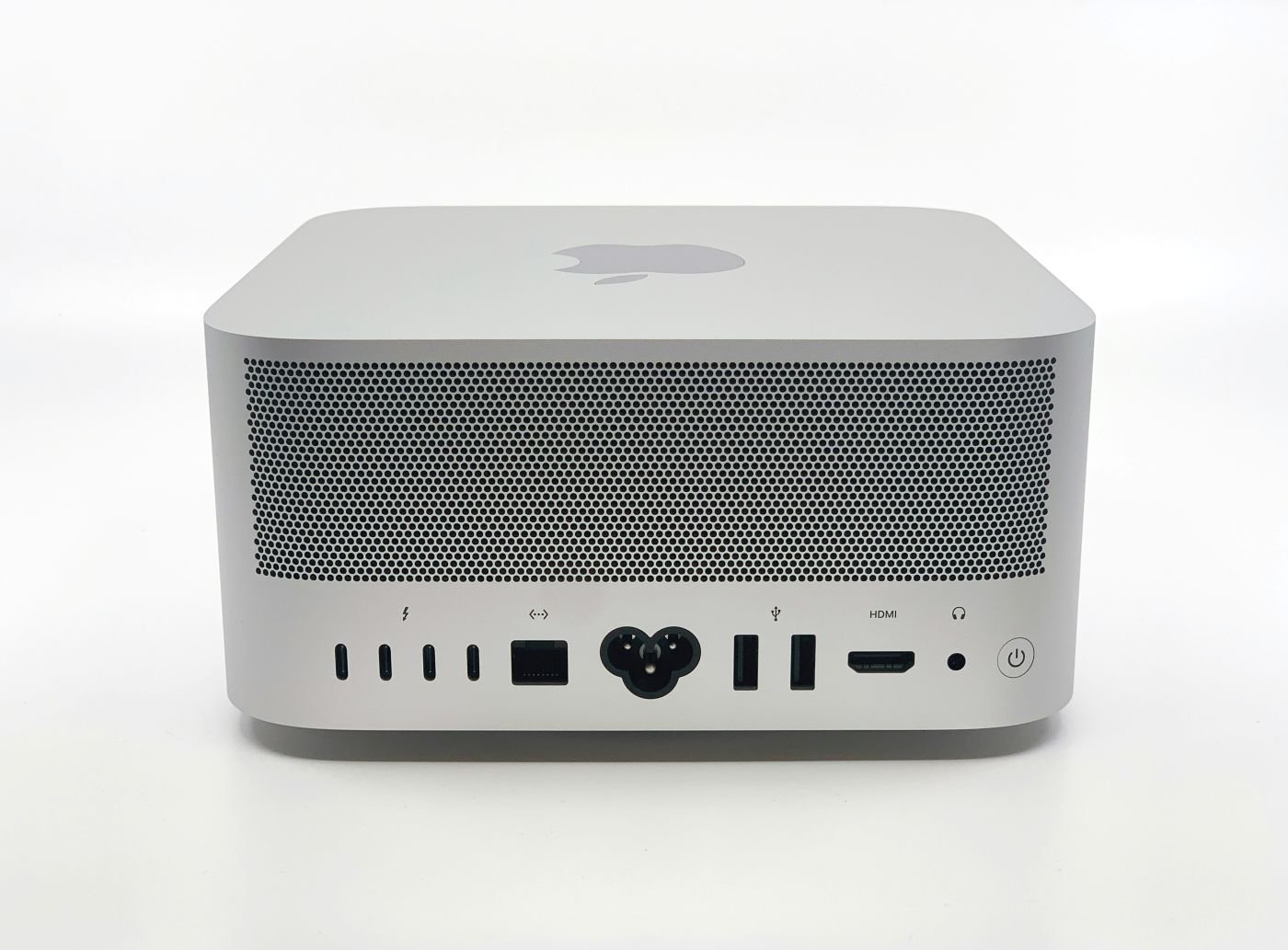

About a month ago, we knew Apple had a new Mac Studio in the pipeline. Now, we have a clearer picture of what it’ll pack under the hood, when it’s likely to show up, and perhaps most painfully, what it might cost.
Here’s what’s new.
When we last covered this, the Mac Studio refresh was looking like a spring arrival, possibly March or April 2026. Bloomberg’s Mark Gurman had suggested it would land “not long after” Apple’s early Mac updates.
That window appears to have slipped.
In a more recent “Power On” newsletter, Gurman revised his expectation to the “middle of the year.” AppleInsider also notes that internal code leaked from macOS Tahoe pointed to a Studio update landing in summer 2026. Both signals now point toward June, and WWDC, Apple’s annual developer conference, is the most natural stage for that.
This wouldn’t be the first time Apple used WWDC to drop a Mac Studio. The M2 Max and M2 Ultra versions launched at WWDC in June 2023. History could be repeating itself.
A new look under the hood
While the silver box on your desk might look the same, the way the computer thinks is getting a major overhaul. Reports indicate that Apple is changing the physical layout of the M5 chips. Instead of one giant block, the CPU and GPU are expected to sit on separate blocks.
This change, often called “Fusion Architecture,” could give users more choice when they click buy. For example, if you do heavy 3D work but don’t need a massive CPU, you might be able to choose a specific mix that better fits your workload.
The chips: M5 Max is real, M5 Ultra is next
This is where things have gotten significantly more concrete.
As of March 2026, Apple has officially launched the M5 Max, which is already inside the latest MacBook Pro lineup. That matters for the Mac Studio rumor picture because chips typically make their way into desktops a few months after their laptop debuts.
According to Macworld, the M5 Max features an 18-core CPU, built around six “super cores” — Apple’s rebranding of its top-tier performance cores — alongside 12 additional performance cores for multithreaded work. On the graphics side, buyers can choose between a 32-core and a 40-core GPU, with each core now featuring integrated Neural Accelerators for AI and machine learning tasks.
The M5 Ultra hasn’t been announced yet, but the math on it is fairly predictable. Apple builds its Ultra chips by fusing two Max dies, so the M5 Ultra is expected to have around 36 CPU cores and up to 80 GPU cores. That would be a significant jump over the current M3 Ultra, which maxes out at a 32-core CPU and 80-core GPU, and would reclaim Apple’s GPU performance lead while delivering meaningfully more CPU headroom.
One subplot worth watching: chatter in mid-2025 about an M4 Ultra in development.
AppleInsider reported that internal testing had taken place, but testing doesn’t guarantee a launch. Macworld now says Apple has “canceled development of the M4 Ultra entirely,” meaning the lineup jumps straight from M3 Ultra to M5 Ultra. Unusual, but it tracks with what we’ve seen from Apple’s chip cadence before.
Performance: 8K video and beyond
If you’re a video editor or a developer, the rumored numbers for the M5 Ultra are impressive. Geeky Gadgets reports that benchmarks for the M5 Ultra are “nearing 41,000” in multi-core performance, which would be the largest jump we’ve seen in the Ultra lineup to date.
With a rumored 80-core GPU, the Mac Studio is being positioned as a machine capable of rendering 8K video in seconds rather than minutes. It is also expected to be a titan for AI work. MacRumors points out that a maxed-out Mac Studio with a previous Ultra chip was already capable of running massive AI models “entirely in memory,” and the M5 Ultra is expected to push that boundary even further.
Better connectivity
The M5 platforms are expected to bring Wi-Fi 7 and Bluetooth 6, enabled by Apple’s new N1 networking chip. The current Mac Studio tops out at Wi-Fi 6E and Bluetooth 5.3, so this is a genuine generational step up for wireless performance and range.
Thunderbolt 5 is expected to carry over, as are the rest of the physical ports, the SD card slot, USB-A ports, HDMI, 10Gb Ethernet, and the 3.5mm headphone jack. The port count and layout should remain identical to the current model.
Storage gets a baseline bump
MacWorld reports that the M5 Max version is expected to ship with a 1TB SSD as standard, up from the current 512GB. The M5 Ultra is expected to start at 2TB, up from 1TB. Maximum storage capacities, 8TB for the Max, 16TB for the Ultra, are expected to stay the same.
Memory bandwidth should also improve. Apple’s base M5 chip already delivers a 28% improvement over M4, and proportional gains are expected across the Max and Ultra variants. The top configuration of the M5 Max is likely to support up to 128GB of unified memory with around 614GB/s of memory bandwidth.
One thing to flag: Apple has already removed the 512GB RAM option from the current Mac Studio. AppleInsider attributes this to pressure on memory supply driven by demand for AI infrastructure, and notes that Apple may continue to limit high-memory configurations at launch until market conditions ease.
Price: Brace yourself
This is the part that stings. A month ago, we flagged tariffs as a potential source of pricing pressure. Since then, the signals have gotten harder to ignore.
In a 2026 earnings call, Apple CEO Tim Cook acknowledged that the company is seeing “less flexibility in the supply chain than normal,” with wholesale memory pricing “increasing significantly,” per Macworld’s reporting. That’s the CEO of Apple telling investors and, by extension, customers, that costs are going up.
There’s also a more recent precedent to look at. When Apple refreshed the MacBook Pro in March 2026 with M5 Max, it removed the lower-storage entry tier entirely, effectively pushing the starting price of that model to $3,599 by shipping it with a 2TB SSD as default. If Apple takes the same approach with the Mac Studio, raising the base storage to 1TB and adjusting the price accordingly, buyers should expect the entry point to climb above $1,999.
Macworld estimates a bump of roughly $200 could result from the storage change alone, though broader supply chain pressures could push it further. For now, the current Mac Studio starts at $1,999 for the M4 Max model and $3,999 for the M3 Ultra. Those numbers are likely to change.
In other Apple news: The tech giant is reportedly offering massive bonuses to retain top AI talent. Here’s what it reveals about the intensifying war for AI dominance.
Read the full article here