





Google has quietly renamed one of the Pixel 10 Pro’s key camera features.
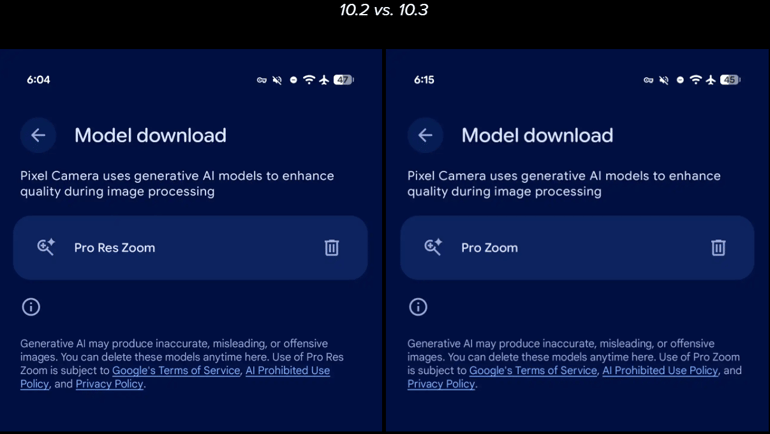
With the Pixel Camera 10.3 update, Google has dropped “Res” from its 100x zoom feature, renaming it from Pro Res Zoom to Pro Zoom. The update brings no interface or performance changes, but after users update their app to version 10.3, they will notice the new label in the app settings, on help pages, and in Google Store listings for supported devices.
Google hasn’t explained its reasons for the change, but the simpler name seems intended to improve clarity for users and keep its branding consistent with other Pixel Pro features, while avoiding confusion with Apple’s ProRes format.
What is Pro Zoom anyway, and how does it work?
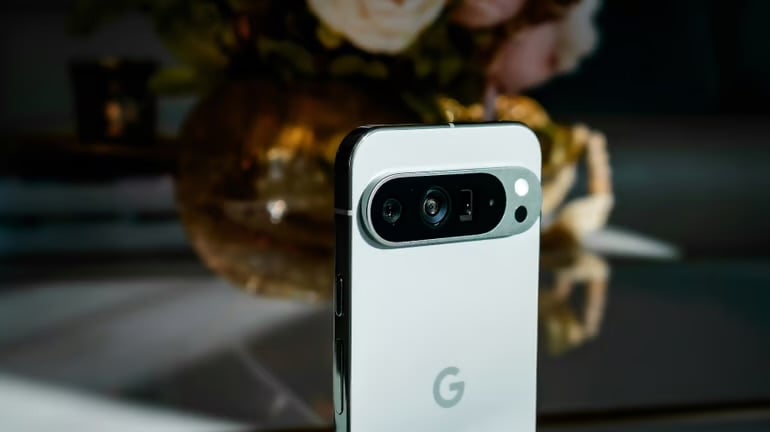
Pro Zoom is exclusive to the Pixel 10 Pro and Pixel 10 Pro XL. Both devices have three rear camera lenses:
- The main (wide) camera has a 50 MP capacity
- The ultra-wide camera has a 48 MP capacity
- A telephoto camera that has a 48 MP capacity with 5x optical zoom
The Pro Zoom feature uses the telephoto lens, which, due to hardware constraints, is limited to a 5x optical zoom. Achieving a 100x zoom with such a camera will naturally result in a blurry image.
To fix this, the camera rapidly captures several frames using the device’s 5x telephoto sensor and processes them with on-device machine-learning models. The software analyzes patterns, edges, and colors in the scene to reconstruct missing detail, helping produce sharper images even at extreme zoom levels.
Using this approach is part of a broader shift in smartphone photography, where software processing plays an equally significant role as the camera hardware itself. Instead of always increasing camera lens sizes, which is unsustainable, manufacturers are increasingly using machine learning to enhance images immediately after capture.
Sometimes, these technologies start working even before the user clicks the shutter, just like how live capture works on iPhones and other smartphones with similar technology. With so many image angles and frames captured in split seconds, advanced processing becomes easier for camera software, ultimately producing images that rival those of dedicated cameras.
What Google may be up to
We already know that this name change update didn’t come with any new feature, but that isn’t the only change Google has made to cameras recently.
According to Android Central, a different update, the Android 16 QPR3 update, was dropped earlier this month. It fixed a camera bug that crashed camera apps on Pixel 9 and newer devices.
Every improvement we’ve seen recently may be part of a broader attempt by Google not just to improve the Android experience for users, but to get ahead of its main competitor — Apple.
Read the full article here