



This is Lowpass by Janko Roettgers, a newsletter on the ever-evolving intersection of tech and entertainment, syndicated just for The Verge subscribers once a week.
Atlas Obscura has been crowdsourcing strange and wonderful places from all around the world since its founding in 2009. To date, the site’s users and editorial staff have collected and curated articles and photos for over 32,000 such places, ranging from abandoned theme parks to hidden beaches to Japan’s Cat Island. Atlas Obscura’s community has created over 93 million lists throughout the years, and the company has been releasing books and podcasts to further highlight the obscure and visit-worthy.
Of course, many of the listed places are simply out of reach for most people. “The premise of the company was to make exploration available to everybody,” says Atlas Obscura’s chief content officer, Doug Baldinger. That includes people who can’t afford expensive international travel. When consumer VR first emerged a decade ago, its ability to transport people to faraway places seemed a perfect solution for adventure seekers unable to visit them in person. “We [wanted] to show people that you can have access to these things wherever you are,” he says.
Alas, the tech wasn’t what it was cracked up to be. Aiming for maximum exposure, Atlas Obscura bet on affordable headsets like Samsung’s Gear VR and Meta’s Oculus Go, only to quickly realize that those devices came with massive limitations. Without six degrees of freedom, visiting a place in VR didn’t really feel like being there. Plus, most of those early headsets ended up catching dust, with disillusioned consumers giving up on them after a few weeks.
“The delivery platform wasn’t really up to what we wanted to do with it,” recalls Nathan Anderson, whose New Canvas studio has been helping Atlas Obscura with its immersive media efforts.
Atlas Obscura gave VR another shot last year by re-releasing its app with remastered content on Meta’s Quest, and in recent weeks also brought it to Android XR and Steam. Now, the company is getting ready to bring immersive experiences to anyone no matter what device they’re using. In early 2026, Atlas Obscura plans to launch a WebXR-based social 3D experience called the Obscura Society.
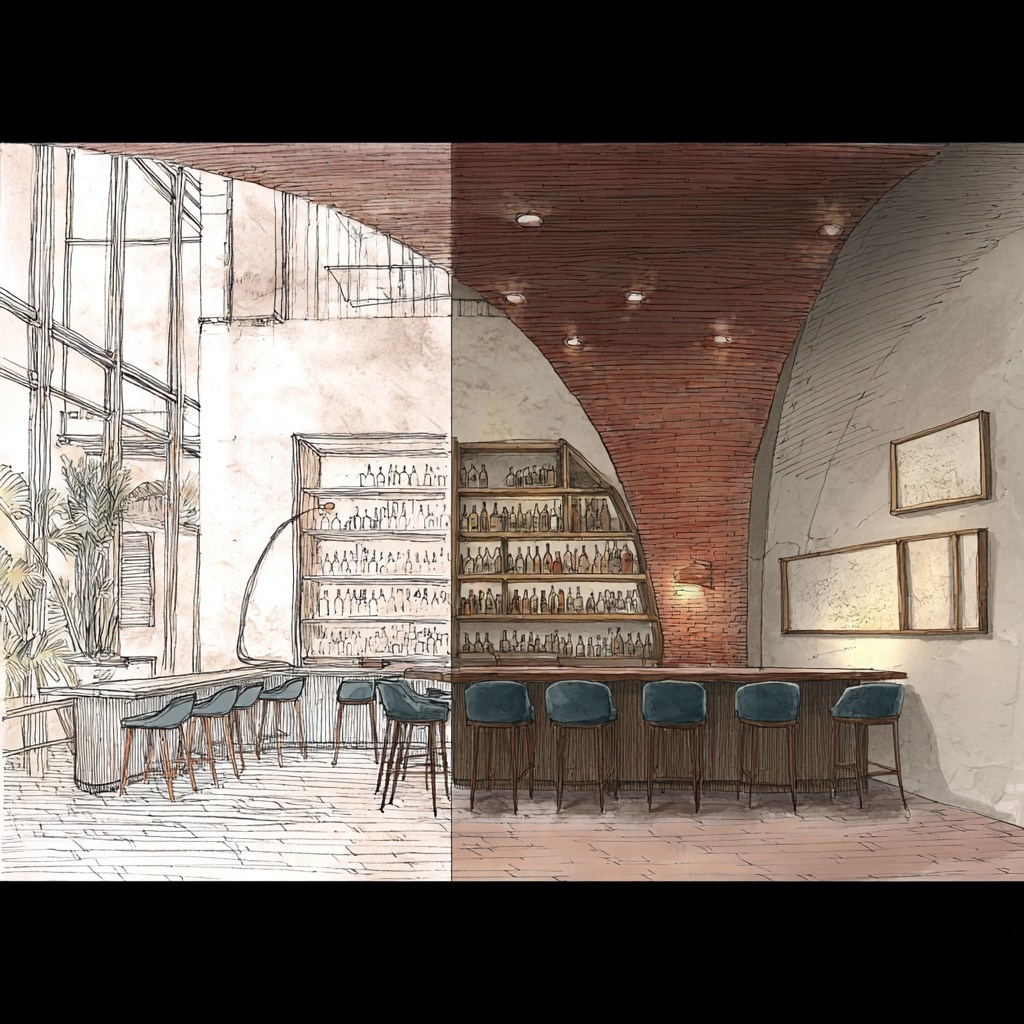
The Obscura Society will be a virtual lounge that Atlas Obscura community members can visit to hang out with the help of 3D avatars, have voice chats, and explore places from the site’s massive catalog together. There will also be a bartender serving up virtual drinks and factoids about real-world destinations, and people using headsets will be able to use portals that directly take them into the Atlas Obscura VR apps.
The Obscura Society will be powered by HTC’s Viverse platform, and Baldinger freely admits that he wasn’t all that familiar with it when New Canvas first proposed the collaboration. However, Viverse ultimately won out over competing metaverse platforms like Meta’s Horizon Worlds or VRChat because it has a lower barrier of entry. “It’s about accessibility,” Anderson says. “Even on Horizon Worlds, you still need to have an account to log in.”
Viverse not only works without an account, it can be directly embedded into the Atlas Obscura website, allowing community members to hop from an article or a podcast into the virtual lounge with or without a VR headset. “The vast majority of people will be coming in through desktop and mobile, we expect,” Anderson says.
HTC’s platform already sees about equal usage from desktop, mobile, and VR users, according to Viverse head of growth Andranik Aslanyan, whose company contributed to the funding for the Obscura Society through its creator funds. “We’re completely device-agnostic,” he says, adding that this extends to immersive hardware. “There’s more Meta headset users that use our platform than HTC [Vive headset] users.”
Viverse already hosts over 23,000 3D worlds, but Aslanyan prefers to not call it a metaverse. “We just generally avoid the word since it has this connotation that it’s one general world,” he says. Instead, spaces like the Obscura Society function as separate 3D web entities, which Aslanyan likens to YouTube player embeds. “We want to get as close as we can to video consumption,” he says.
New Canvas envisions lounges like the Obscura Society as a new form of third places in the metaverse. Places that aren’t explicitly games, but gathering grounds for like-minded people. “Often, you just want to meet with people and just hang out with them,” Anderson says. Places that can be low-stakes entry points into virtual worlds, while also offering portals to full-blown VR experiences for people who want to go deeper.
The Obscura Society is also betting on AI, which allows the bartender to pull nuggets from Atlas Obscura’s vast knowledge base. That’s not without risk: AI is a bit of a point of contention for Atlas Obscura these days.
The company behind the site recently faced staff and reader pushback over the CEO’s plans to integrate AI into Atlas Obscura, as well as significant staff reductions. “There’s a lot of sensitivity around it in terms of how we are handling production,” says Baldinger. “We see it as an instance of AI that could actually help foster human connection.”
Read the full article here