

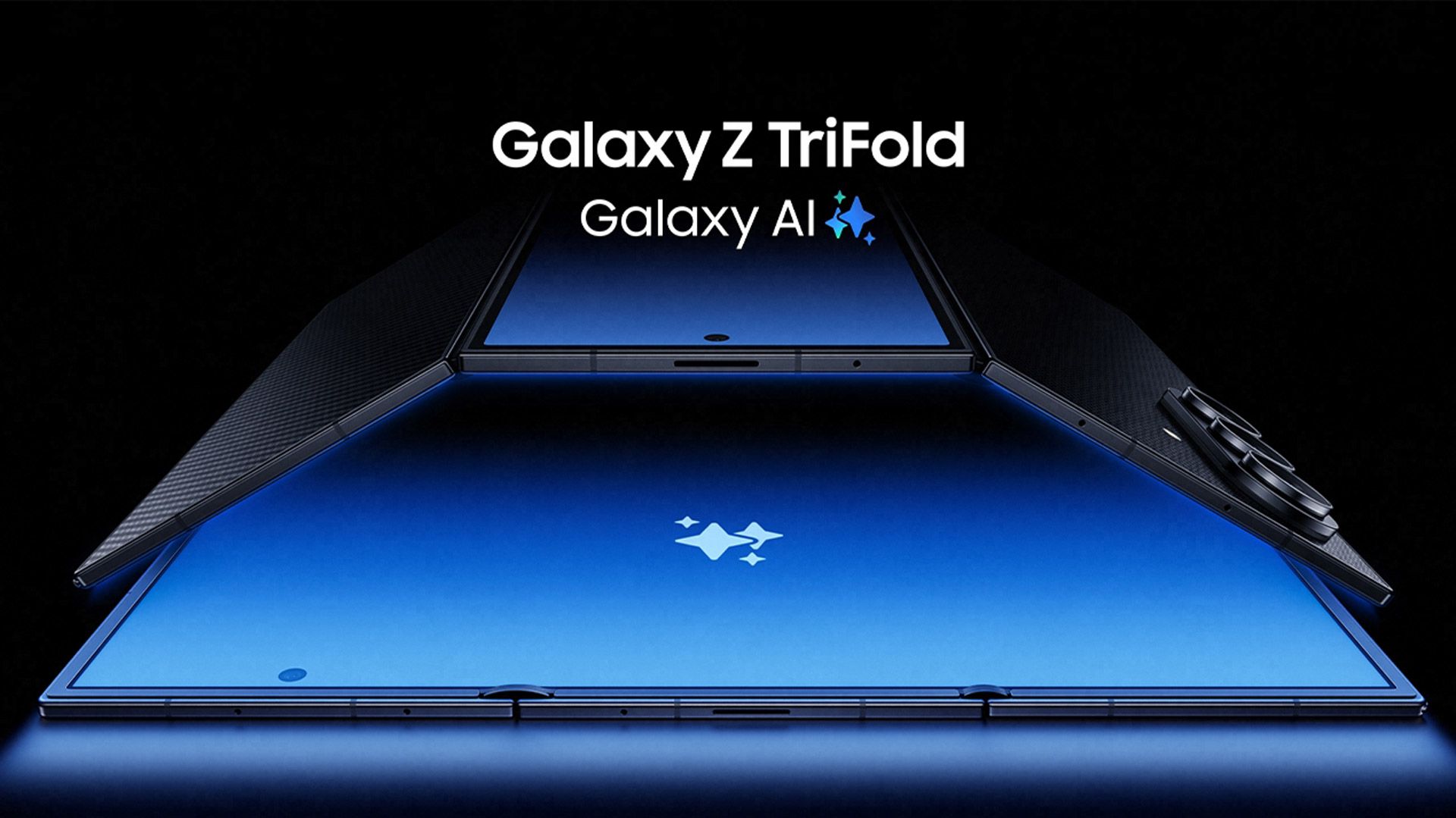

I still can’t quite believe the Samsung Galaxy Z Trifold is real. Samsung’s next-generation folding phone holds the promise of an entirely new way to use our phones, one that can switch from the convenience of a small vertical display to the large canvas of a tablet screen in mere seconds.
And while Huawei was the first to make such a device with its China-exclusive Mate XT, Samsung’s model will have a greater impact on the industry and mobile culture because it’s coming to the US – meaning the Korean tech titan will forever be remembered as the one to popularize folding phones, modernized flip phones, and tri-fold phones. Three for three. Not bad.
In fact, we’ve already seen rumors of a competing model from Xiaomi in the wake of the Galaxy Z Trifold’s announcement, which likely won’t come to the US but could serve as competition in the UK and Europe (via Android Central).
Where is the iPhone Fold?
The tech fans reading this will already know the answer. Despite years of rumors, Apple has yet to produce a folding iPhone of any kind, let alone a tri-fold with an iPad-sized inner display.
The reason I bring up the Galaxy Trifold is to highlight the fact that things are now beginning to move on. As I’ve said before, Apple doesn’t rush, but there’s a difference between taking your time and ignoring a trend for so long that you miss the boat entirely.
That’s not to say the current, uh, bifold folding phones are going anywhere, but they’re now an established part of the phone market and a reasonably developed technology, not the type of shiny new thing Apple became known for pioneering in the days of the original iPhone, iPad, and Apple Watch.
Apple’s first foldable is rumored to come with an inner display of about 7.7 inches and a small cover screen of about 5.5 inches. Those screens are smaller than either the Galaxy Z Fold 7 or the Google Pixel 10 Pro Fold.
Additionally, the iPhone Fold is rumored to measure 4.6mm thick when unfolded, which isn’t exactly unimpressive, but is still eclipsed by the 4.2mm Galaxy Z Fold 7.
Without any class-leading design specs on a design-focused handset, and with the spectre of trifold phones looming large, I worry that the iPhone Fold might lack staying power in an increasingly saturated and competitive market.
Keeping up with the competition
And though some might say that Apple will make a huge impact no matter what the product is, I think this is only necessarily true in the short term.
For example, the Vision Pro headset has had basically no resonance in the tech zeitgeist since launch, which I put down to Apple waiting too long to release it. The Vision Pro came at a time of reasonable maturity for the VR space, and as such, couldn’t claim pioneer status or land with much of a “wow” factor, an issue exacerbated by its high price point. I worry that the iPhone Fold could tell a similar story if Apple waits too long, especially since folding phones are often phenomenally expensive.
And, more recently, the iPhone Air has apparently sold poorly and fallen out of headlines in the few months since launch. Just because a new iPhone hits shelves doesn’t mean it’s going to stick in people’s minds as Apple’s mobile rival pushes ahead with headline-grabbing trifold hardware.
I think the best thing Apple can do now is put the pedal down and aim for a 2026 launch for the rumored iPhone Fold. I don’t want to see another Vision Pro situation for a device with the potential to be one of the best iPhones of all time. Though we might not know exactly when the Galaxy Z Trifold is coming to the US, I hope Cupertino can hear the clock ticking.
With that said, I’m sure there is a contingent of iPhone diehards that have been watching the best folding phones from afar but simply aren’t willing to give up iOS – for these people, it doesn’t really matter when Apple releases the iPhone Fold, as long as it eventually does.
But even as an Apple fan, I’m personally quite keen for Apple to keep up with the competition, because when it does put the effort into keeping pace with the industry at large, brilliant things happen. Here at the TechRadar office, we’re still not over this year’s base-model iPhone 17, with its 120Hz ProMotion display, twin 48MP cameras, and enlarged battery; it’s the best value base-model iPhone in years, and a lot of that can be chalked up to finally reaching the hardware standards set by Samsung and Google.
So with that in mind, I want Apple to take the same attitude with its first folding phone. I’m not saying it needs to exactly emulate the Galaxy Z Fold 7 or any other Android folding phone, and in fact, I’m still a fan of the iPhone Fold’s rumored iPad mini-style form factor. With that all said, if Apple is going to go with smaller screens, then timing is really going to matter for the iPhone Fold’s success; I don’t think it’s a factor Apple can ignore for much longer.
Read the full article here