


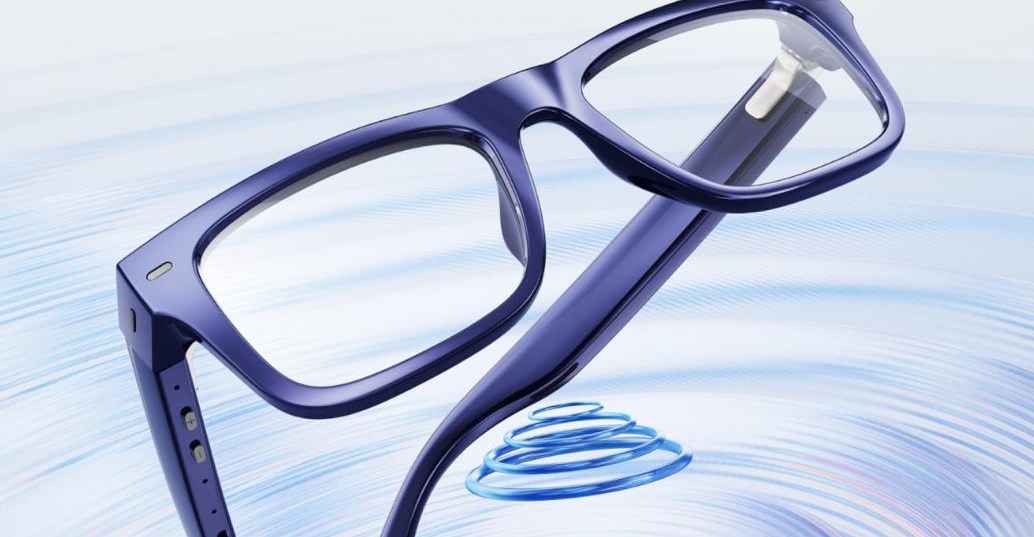

EssilorLuxottica, the company that Meta partnered with for its Ray-Ban smart glasses, announced a new version of its Nuance Audio glasses that are designed to double as discreet over-the-counter hearing aids. The new Nuance Audio Plus still manages to squeeze their FDA cleared hearing aid tech into temple arms that don’t look much thicker than what you’ll find on a standard pair of glasses. But the new Plus option introduces improved sound boosting, better voice clarity, extra on-device controls, and up to 10 hours of battery life.
The Nuance Audio Plus are now available in the US in three frame styles including Square, Pathos, and Upturn in five colors: shiny black, shiny burgundy, deep blue, amber, and olive green. Pricing starts at $829 but expect to pay more when ordering them with prescription lenses. The standard Nuance Audio smart glasses will still be available alongside the new Plus model and instead start at $699.
The most compelling upgrade to the Nuance Audio Plus are their audio amplification improvements that include better speech clarity in noisy environments. Through an accompanying mobile app you can switch between two modes. Frontal is designed to pick up and amplify the voice of the person you’re speaking to in face-to-face conversations, while All-Around boosts the volume of everything happening around you. You can select from one of four “pre-configured amplification settings” in the app and adjust how much background noise you want to hear with three levels of noise reduction.
To make users less reliant on pulling out their phones and opening the mobile app, the Nuance Audio Plus glasses also introduce additional on-frame controls including a dedicated power slider and separate volume controls. While the glasses are powered on you can put them into sleep mode to extend battery life by folding the temple arms, while unfolding the glasses quickly powers them back up. The new Nuance Audio Plus can also be used to directly answer incoming voice calls without reaching for your phone first, but only with the glasses paired to an iPhone. That feature isn’t supported with Android.
Read the full article here