





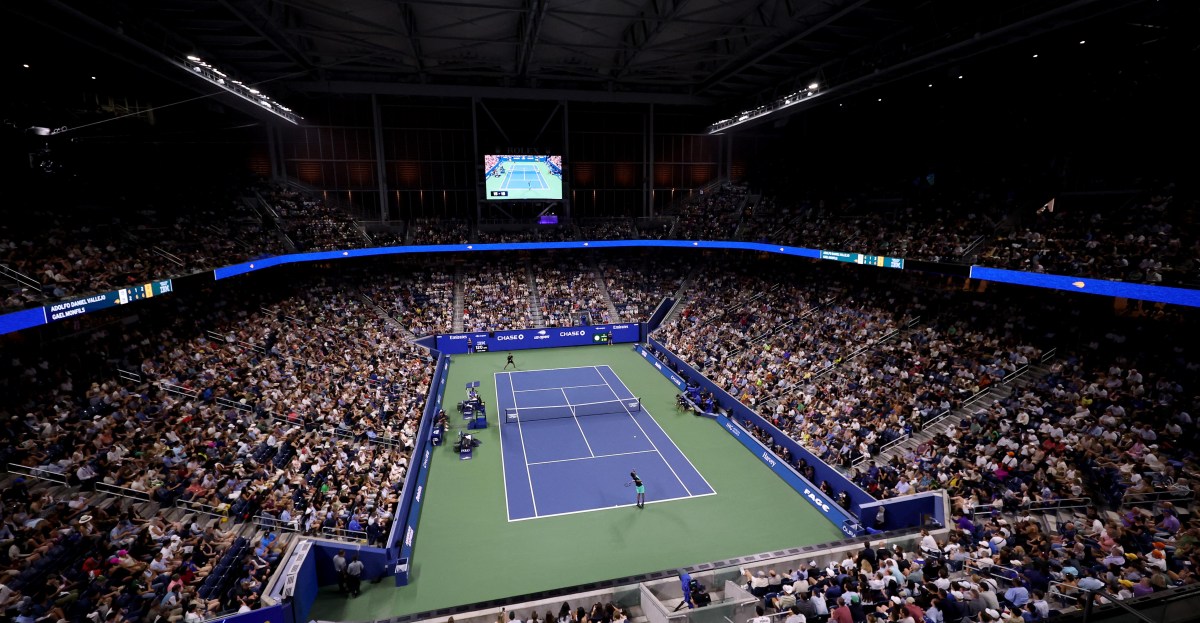

During Naomi Osaka’s match against Anastasia Zakharova at this year’s US Open earlier this week, a gaggle of ring light-wielding influencers who were packed in a luxury suite became enough of a distraction that the umpire paused the match and repeatedly asked them to quiet down. Elsewhere in the USTA Billie Jean King National Tennis Center, other creators could be seen asking US Open staffers to take full-flash photos of them while Osaka and Zakharova were playing.
Last month, United States Tennis Association (USTA) media operations director Jeanmarie Daly said that the US Open was “almost doubling” the number of content creators it was approving for credentials. There were “close to 100” influencers at this year’s tournament — up from 54 last year. But in a statement to ABC News, USTA spokesperson Brendan McIntyre emphasized that the influencers whose antics disrupted Osaka and Zakharova’s match were not credentialed by the organization. McIntyre also told The Athletic that media credentials were not given to Meg Radice and Audrey Jongens — two lifestyle influencers whose access to the US Open was revoked after they posted images of their badges to Instagram. According to McIntyre, Radice and Jongens “were improperly submitted for credentials on a staff list provided by a food vendor,” and seems like the creators might have screwed themselves over by flexing for their followers.
Though those creators weren’t exactly practicing proper US Open etiquette, they were doing their jobs (read: making content) with the single-minded focus that often makes their presence an annoyance to the people around them. These influencers were at the US Open to share the experience with their followers, and regardless of whether they were invited by the USTA directly or not, they were helping the organization advertise the event to an audience that might not have otherwise been paying attention.
Influencers have become an integral part of the advertising industry, with US creator ad spend hitting $37 billion in 2025 and being projected to reach $44 billion by the end of this year. Companies are increasingly relying on content creators to market their products, but what happened at the US Open is a snapshot of how that reliance can lead to undesirable outcomes for everyone involved. Videos of the US Open disruptions have gone viral across social media and sparked a conversation about whether influencers are the best people to invite to exclusive functions.
But the point many people seem to be glossing over is that influencers are usually only invited to events like the US Open, awards shows, and film premieres because a brand decided it was worth bringing them there. As irksome as creators can be when they take up too much public space, that kind of behavior is something the companies that hire them have to anticipate. And as reporter Jessica Schiffer notes, some brands have been scrambling to get ahead of any potential blowback by sending out “helpful reminders” on tennis etiquette.
Before a rule change in 2024, the US Open was actually much more strict about requiring attendees to stay in their seats until breaks during the match when players switch sides of the court. Now attendees can get up whenever they want, and the event features designated spaces close to the tennis courts where people can move freely — something tournament director Stacey Allaster described as “an important addition to the fan experience at the US Open.” The influencers at this year’s US Open might not have technically been breaking any rules, but they were having a negative impact on other attendees’ viewing experience. And in the days after videos of the influencers began spreading online, the USTA put up new signage outside stadiums asking spectators to “please refrain from using flash photography or other lighting.”
Taking selfies and shooting videos are core elements of the content creation hustle, but brands working with influencers should have made clear that, during a tennis tournament, there are times when it’s best to just watch the matches. While the content creators might have been having fun, many of the people around them weren’t able to enjoy the match in peace. That kind of main character energy often is exactly what companies want because it’s what keeps influencers’ fans engaged. But brands have to understand that simply letting creators run wild isn’t always the best plan of action.
Callaway Golf Company learned this the hard way last month after an ad produced by YouTube channel-turned-sports apparel company Good Good hit the internet and immediately sparked outrage. The video — a spoof of Curry Barker’s Obsession — features Good Good cofounder Garrett Clark grinning maniacally after shoving professional golfer Alexis Miestowski to the ground when she reaches for his Callaway-branded driver. Many saw the ad as being distasteful and making light of violence against women, which prompted Callaway to issue an apology and sever ties with Good Good.
In a statement about the ad and subsequent backlash, Callaway CEO Chip Brewer said that “mistakes were made, and we are taking the matter very seriously.” Brewer also admitted that Callaway signed off on the video before it was posted, but he insisted that its content did not reflect the company’s values. Though Callaway was quick to take the ad down, the fact that it was approved in the first place is an issue in and of itself. Even if the ad hadn’t been misogynistic, it still wasn’t funny or a particularly good riff on Obsession, and a more responsible advertising head probably would have requested significant revisions.
The video was very on-brand for Good Good — a company that targets the kind of young, bro-y men whose attention (and money) the golfing industry is very keen on capturing. As The Athletic points out, Good Good is just one of many influencer outfits, including Barstool Sports and No Laying Up, that have built successful partnerships with golf brands.
Similar to the way that the brands who sent influencers to the US Open should have given them some behavioral direction, companies like Callaway have to be mindful about what it means to use “edgy” content creators as their ambassadors. Influencers who have built successful platforms tend to like having creative control over the content they make, but companies paying them for promotion have a personal responsibility to make sure that they’re not being represented by people acting foolishly.
Read the full article here